


Jácaras del Zéfiro

The ensemble

Six musicians who sing and play at the same time to give the Hispanic Baroque back its drive, its dance and its power to move.

Who we are

Founded by baritone Víctor Cruz, Jácaras del Zéfiro offers a vision of historically informed performance in which research and instinct go hand in hand. The aim is to go beyond mere archaeological reconstruction and recover the true pulse of the works: their drive, their dance and their power to move.

The ensemble combines voices, plucked strings, viola da gamba and percussion, bringing together performers with solid careers who see early music not as museum pieces but as a vibrant language that demands knowledge, but also liveliness and character. It made its debut in December 2025 at the Junta de Andalucía’s Música en Adviento series and has since performed at the Madrid International Festival of Sacred Art, Guadix Clásica and the Cádiz Festival of Spanish Music.

How we work

We work from the rhetoric of the affections to offer performances with the intensity and character that the Hispanic Baroque demands. For decades, much Spanish music has been played through an aesthetic filter that is not its own —stiffer and cooler, inherited from Northern European readings. Our job is to give it back its rhythm, accent, physicality and word: things that are in the sources and in the language itself.

We are not after pale or antiseptic voices, but voices with a story, able to speak the text and carry the musical gesture. Five of the six musicians are both singers and instrumentalists: the voices play percussion and strings, and the viola da gamba also sings. That double role gives our concerts a very particular energy, cohesive and theatrical.

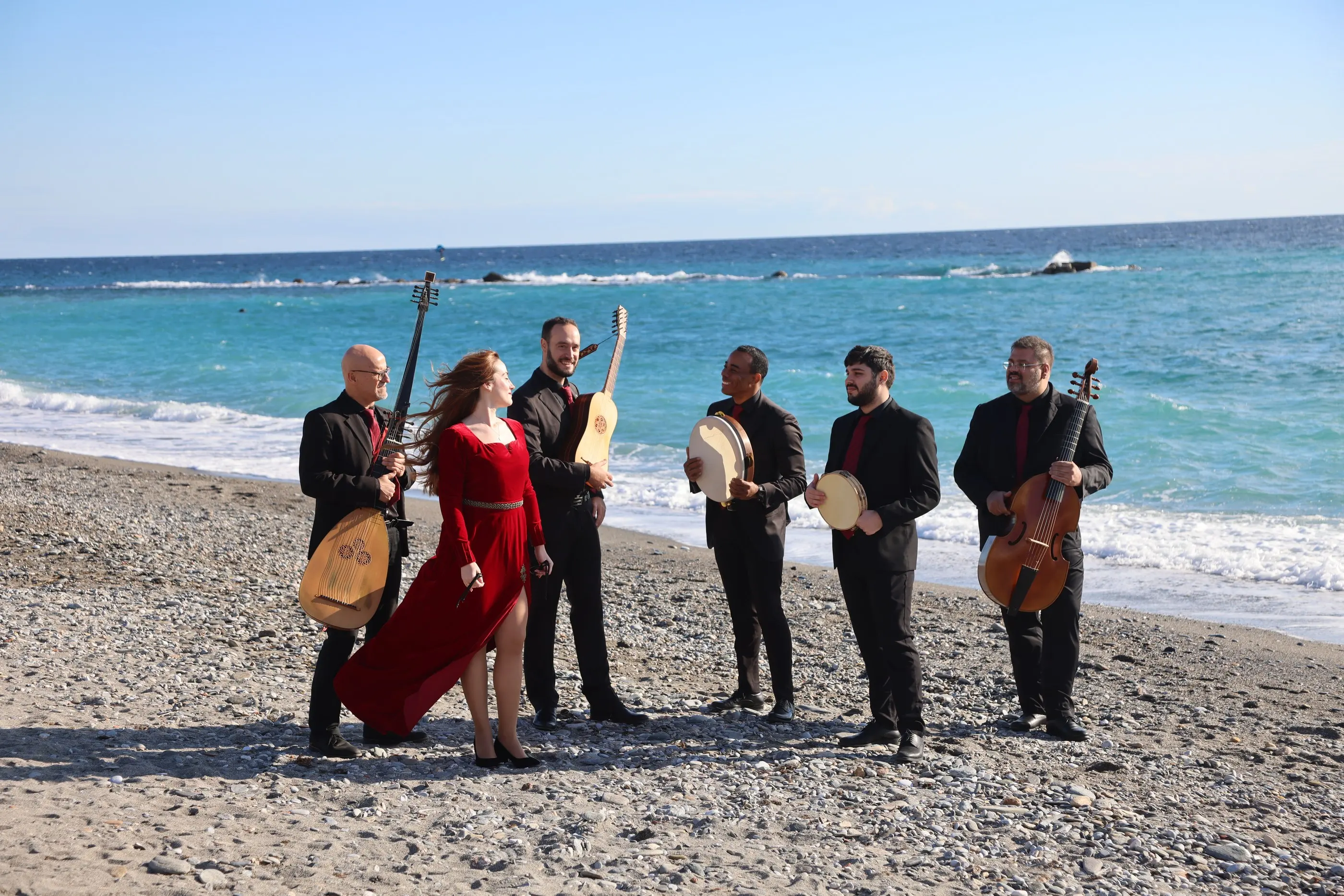
The musicians of Jácaras del Zéfiro chatting on the shore with their instruments

Heritage

From the archive to the stage

Much of our repertoire had not been heard for centuries. We search the catalogues of cathedral archives, track down the manuscripts, interpret the text and transcribe them into modern notation; several of the works we sing were transcribed by Víctor Cruz himself, sometimes together with Jorge Enrique García. In this way we have recovered music from Barcelona, Burgos, Canet de Mar and Guatemala, and are now working on collections in Granada and Guadix.

None of this would be possible without the musicologists who came before us and walk alongside us: Eduardo López Banzo, Mariano Lambea, Lola Josa, Raúl Angulo, Nancho Álvarez, Omar Morales, Roberto Alonso and Iolanda Serrano. And because heritage belongs to everyone, we share our transcriptions so that anyone can study and sing them.

Download our scores

Logo: a tabby cat amid swirls of wind

The name

Jácaras del Zéfiro

Jácaras, because the jácara is one of the most genuinely Spanish genres of the Golden Age: a ballad of rogues and swaggerers that was sung and danced between the acts of plays, and that eventually slipped, “a lo divino”, into the villancicos of the cathedrals. Our programs include some, such as Sebastián Durón’s Vaya, pues, rompiendo el aire.

Zéfiro, after the gentle west wind that brings back spring, flowers and birdsong: “Zefiro torna”, wrote Petrarch, and Monteverdi set it to music. And also, we must confess, because that was the name of Víctor’s cat, who has watched over us ever since from our logo, wrapped in a gust of wind.

The musicians

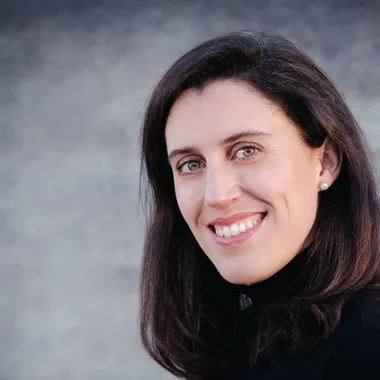
Paloma Friedhoff

Soprano and percussion

Paloma Friedhoff

A Spanish-American soprano, born in Antwerp and raised in Madrid in a family of musicians. She trained at the Escuela Superior de Canto in Madrid, at the Hochschule für Musik und Theater in Munich with Edith Wiens and, as a “la Caixa” scholar, at Indiana University with Sylvia McNair. She has won prizes at competitions in Madrid, Barcelona, Lisbon, Washington DC and St. Louis.

In early music she has premiered and recorded the roles of Bubaste in Conforto’s La Nitteti with Nereydas and Sofonisba in Alessandro Scarlatti’s Scipione in Spagna with La Ritirata, and has sung at the Madrid International Festival of Sacred Art, the Cuenca Religious Music Week and Universo Barroco. She made her Teatro Real debut in 2017 and has appeared as a soloist with the Spanish National Orchestra and Choir and the Film Symphony Orchestra.

Photo: Paloma Friedhoff
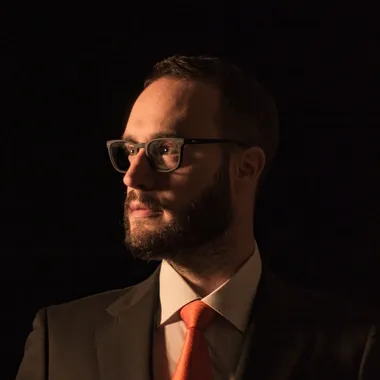
Bruno Campelo

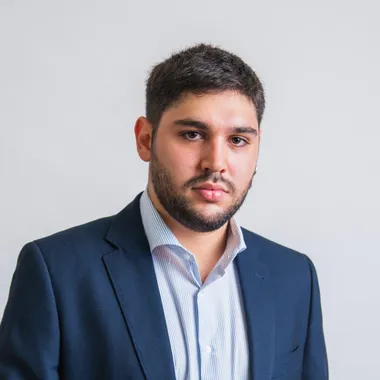
Alto and percussion

Bruno Campelo

A countertenor born in Cádiz in 2001. He began singing in the Escolanía Juvenalia in Jerez while studying piano, and trained with Jorge Enrique García Ortega and with Romina Basso at the Conservatorio Luigi Cherubini in Florence; he has attended masterclasses with Eduardo López Banzo and Carlos Mena. In 2016 he won first prize at the “Ciudad de Sanlúcar” Young Performers Competition.

He is a member of the vocal ensemble Altvs and sings with Al Ayre Español, Accademia del Piacere, Conjunto Vocal Virelay, La Real Capilla, the Orquesta Barroca de Cádiz and Capella Prolationum–La Danserye, under Fahmi Alqhai, López Banzo and Jean Tubéry. He has performed at the Cádiz Festival of Spanish Music, the Úbeda and Baeza Early Music Festival, Palencia Antigua and the UIMP in Santander, and has recorded the Latin music of Antonio Juanas with La Real Capilla.

Photo: José Cáceres

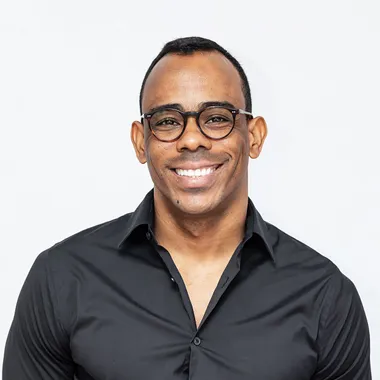
Ariel Hernández

Tenor and percussion

Ariel Hernández

A Cuban tenor based in Spain since 2004. He graduated in Music from the Instituto Superior de Arte in Havana, trained as both percussionist and singer, and was tenor soloist of the Schola Cantorum Coralina, with which he toured and recorded.

He has been a member of Helmuth Rilling’s Festival-Ensemble Stuttgart and the Europa Chor Akademie, and sings with ensembles such as the Capilla Real de Madrid —with which he took part in the complete Bach cantatas—, Musica Ficta, Accademia del Piacere, Los Músicos de Su Alteza and Capilla Peñaflorida. He has worked with Ton Koopman, who invited him to sing with the Amsterdam Baroque Orchestra, Kent Nagano, Federico Maria Sardelli, Andreas Spering and Paul Goodwin. He has been a member of the Spanish National Choir since 2009.

Photo: Adolfo Añino

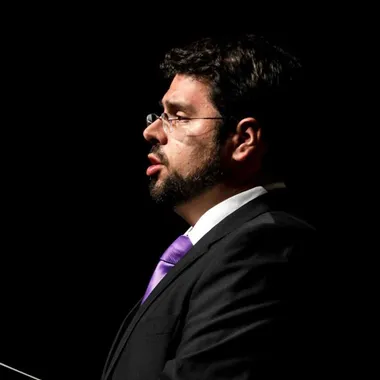
Víctor Cruz

Baritone, plucked strings and direction

Víctor Cruz

A baritone from Guadix (Granada), founder and director of Jácaras del Zéfiro. He graduated with highest honours and First Prize from the Conservatorio Superior in Granada and refined his technique with Carlos Mena and José Antonio López. As a soloist he has sung Orfeo (Monteverdi) with Los Músicos de Su Alteza, Taddeo (L’italiana in Algeri) under Giancarlo Andretta, Aeneas (Purcell), José Lidón’s Oratorio a Santa Bárbara under Aarón Zapico, Bach’s Passions and the Requiems of Mozart, Fauré and Brahms.

He works with Al Ayre Español, Vox Luminis, I Gemelli, the Capella Reial de Catalunya, La Grande Chapelle, Capella de Ministrers and the Orquesta Barroca de Sevilla, among others. He studies plucked strings with Fernando Serrano, accompanies himself on baroque guitar and theorbo, and transcribes much of the ensemble’s repertoire straight from the manuscripts. He has taught singing at Florida International University and the Conservatorio Superior de Extremadura, and works as a presenter and voice actor for Radio Clásica and Spain’s National Centre for Musical Diffusion (CNDM).

Photo: Víctor Cruz

Jorge Enrique García

Viola da gamba and alto

Jorge Enrique García

A countertenor, viol player and conductor born in Cádiz in 1981. He holds a higher degree in flute from the Conservatorio Superior Rafael Orozco in Córdoba, studied singing with Carole Bajac, Howard Crook, Carlos Mena and Richard Levitt, and conducting with Vasco Negreiros and Martin Schmidt.

He has sung with Al Ayre Español, Collegium Vocale Gent, the Capella Reial de Catalunya and La Hispanoflamenca, under Philippe Herreweghe, Diego Fasolis, Yannick Nézet-Séguin, Eduardo López Banzo and Jordi Savall, in halls such as the Amsterdam Concertgebouw, Alice Tully Hall in New York and the Vienna Konzerthaus. Since 2001 he has directed the Conjunto Vocal Virelay, the music chapel of Cádiz Cathedral, recording four volumes from the cathedral’s music archive, as well as the Orquesta Barroca de Cádiz. He founded the Real Capilla del Pópulo.

Photo: Maxine Caulfield

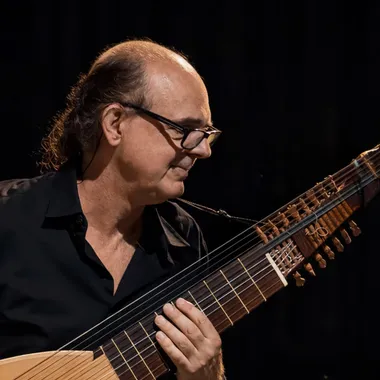
Juan Carlos de Mulder

Plucked strings

Juan Carlos de Mulder

Born in Lima, he studied at the conservatories of Madrid, The Hague and Toulouse. A specialist in early plucked instruments —vihuela, lute, archlute, theorbo and baroque guitar—, he has played continuo in opera and oratorio productions under Philippe Herreweghe, Jean-Claude Malgoire, Nigel Rogers, Jordi Savall, Eduardo López Banzo and Enrico Onofri, and has performed with Hespèrion XX, La Real Cámara and Capella de Ministrers.

He works regularly with Al Ayre Español, the Orquesta Barroca de Sevilla and La Ritirata, and directs Camerata Iberia, with which he has revived repertoires such as the music of baroque Peru. His discography exceeds eighty recordings, including solo albums devoted to Luys Milán and Diego Pisador. He composes and performs for Spain’s National Classical Theatre Company and taught at the Real Conservatorio Superior de Música in Madrid.

Photo: Pablo F. Juárez